
Web + Dashboard
Shipex Case Study
Redesigning a logistics app to simplify shipment tracking, improve usability, and enhance brand trust.
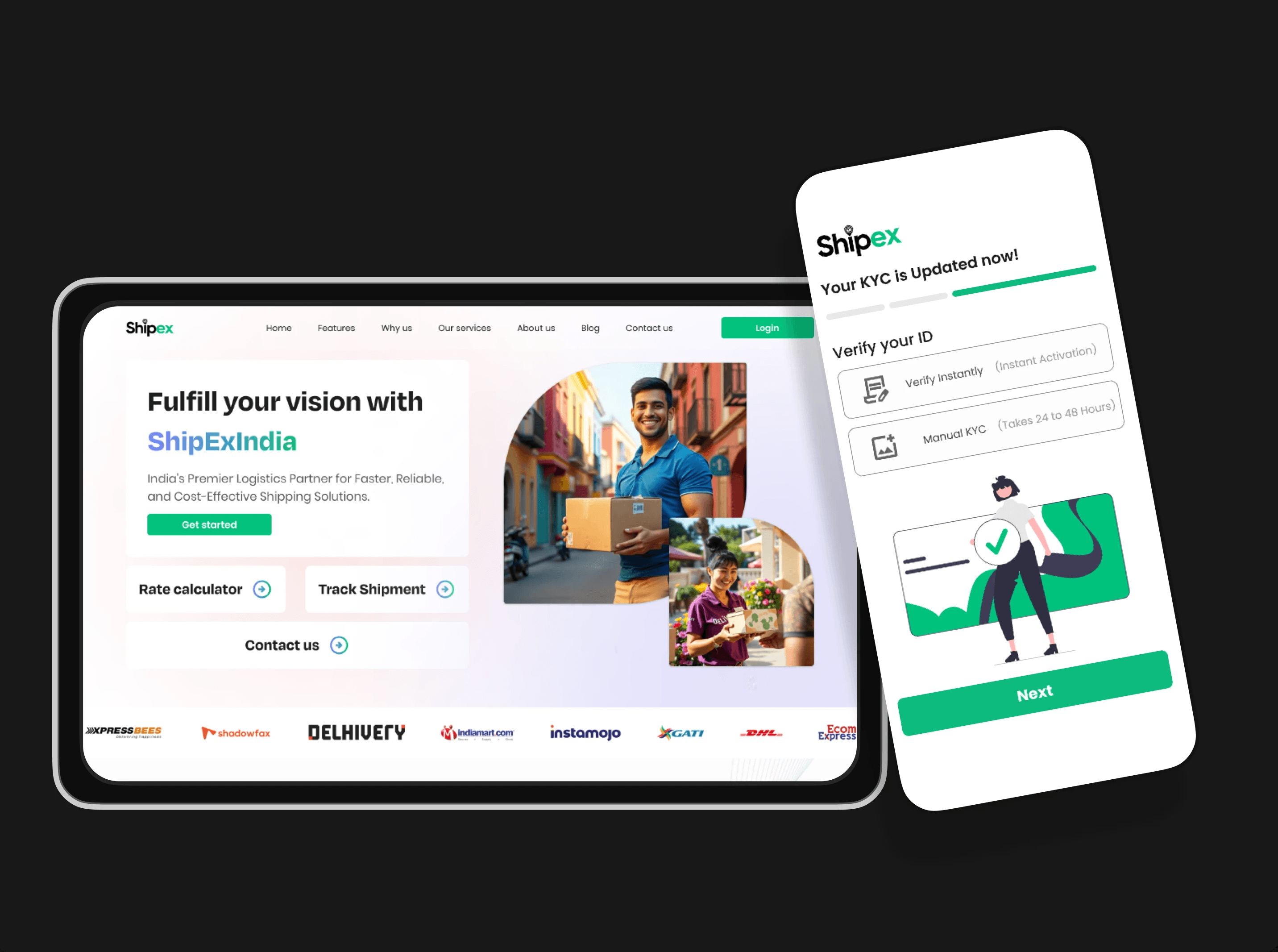
Live Link: shipexindia.com
Project Overview
Goal: Reimagine SHIPEX’s mobile and web platforms to deliver a cleaner interface, faster navigation, and improved shipment tracking for both businesses and individual customers.
Role: Lead UX/UI Designer
Tools: Figma, Illustrator, Photoshop
Duration: 3 Weeks
The Challenge
The original SHIPEX app was functional but cluttered, making it hard for users to quickly track shipments or book deliveries. Our challenge was to create a minimal yet feature-rich interface that could handle complex logistics workflows without overwhelming the user.
Our Process
1. Research & Analysis
Competitive study of 5 logistics platforms (e.g., DHL, FedEx)
Interviews with 10 existing SHIPEX users
Identified bottlenecks: slow booking flow, confusing shipment status indicators, lack of bulk tracking features
2. Wireframing
Mapped out new booking and tracking flows
Simplified menu hierarchy to reduce clicks by 30%
3. UI Design
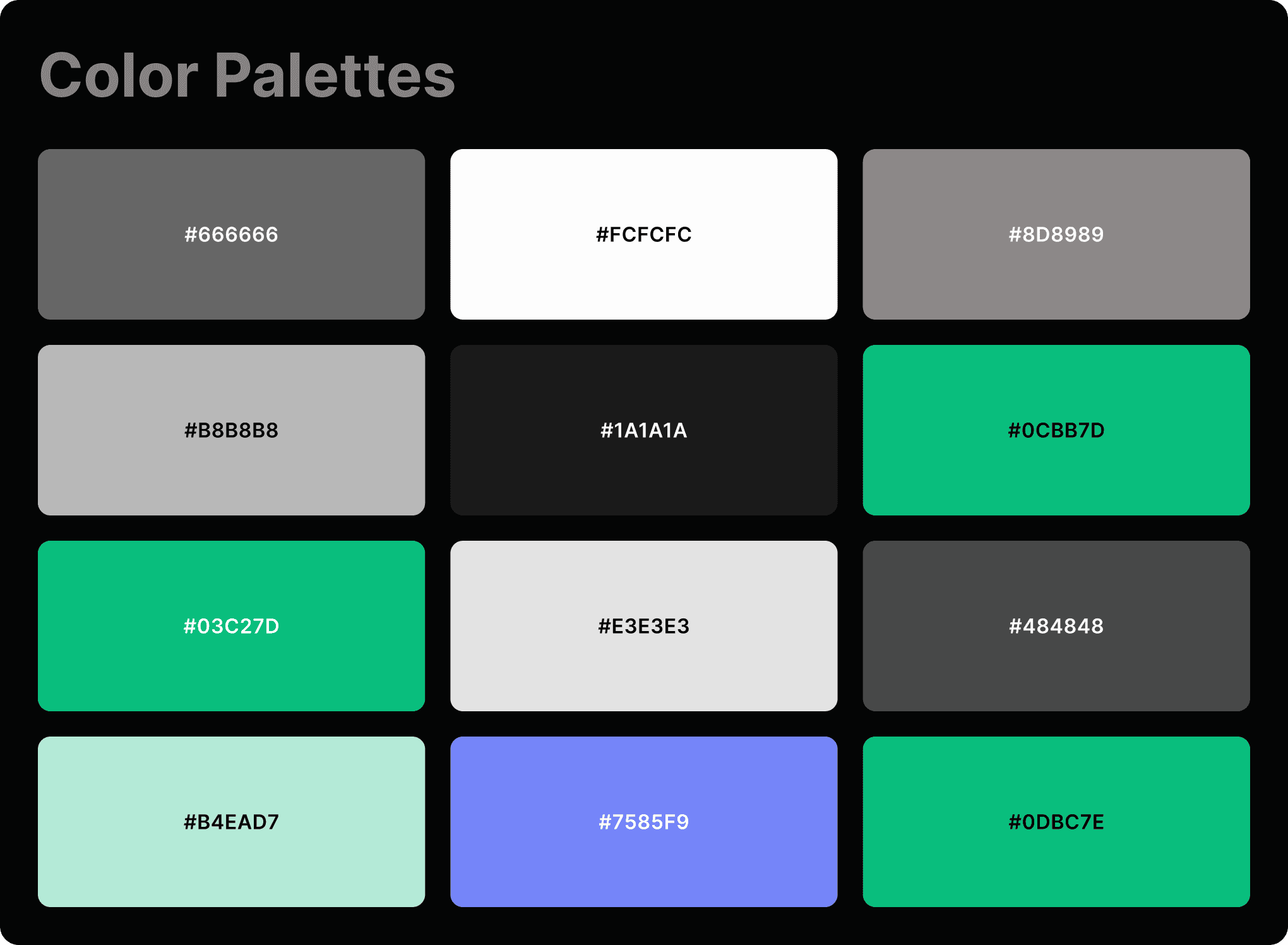
Clean, minimal palette with SHIPEX brand blue as an accent
Intuitive icon set for shipment statuses
Emphasis on whitespace for clarity
4. Prototyping & Testing
Conducted usability testing with 8 logistics managers and 5 retail customers
Added bulk upload feature for businesses
Redesigned shipment progress tracker for better clarity
Our Solution
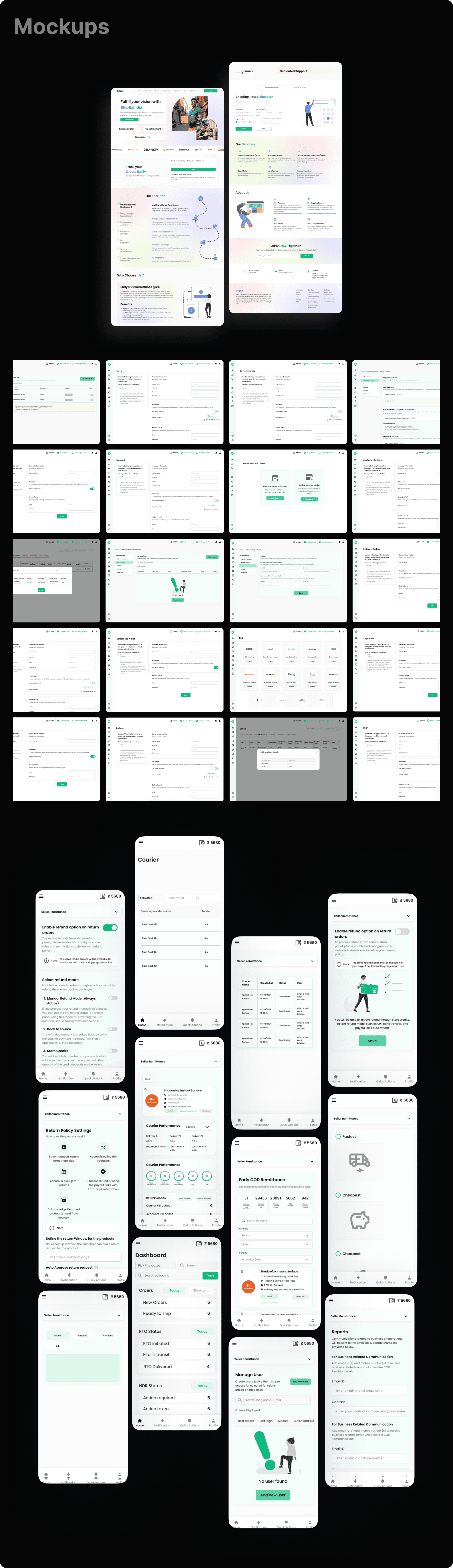
One-Tap Tracking: Track multiple shipments from a single screen
Simplified Booking: Booking process reduced from 6 to 3 steps
Smart Status Indicators: Clear, color-coded shipment stages
Bulk Upload: CSV upload for corporate clients to book multiple shipments at once
Impact & Outcomes
Reduced booking time by 50% in testing
Improved shipment status clarity with zero misinterpretation in feedback sessions
Business clients rated the new interface 4.8/5 in usability surveys
Reflection
Designing for logistics means balancing data density with simplicity. The success of SHIPEX’s redesign came from stripping away unnecessary complexity without sacrificing functionality.