
Application Design
IILM Case Study
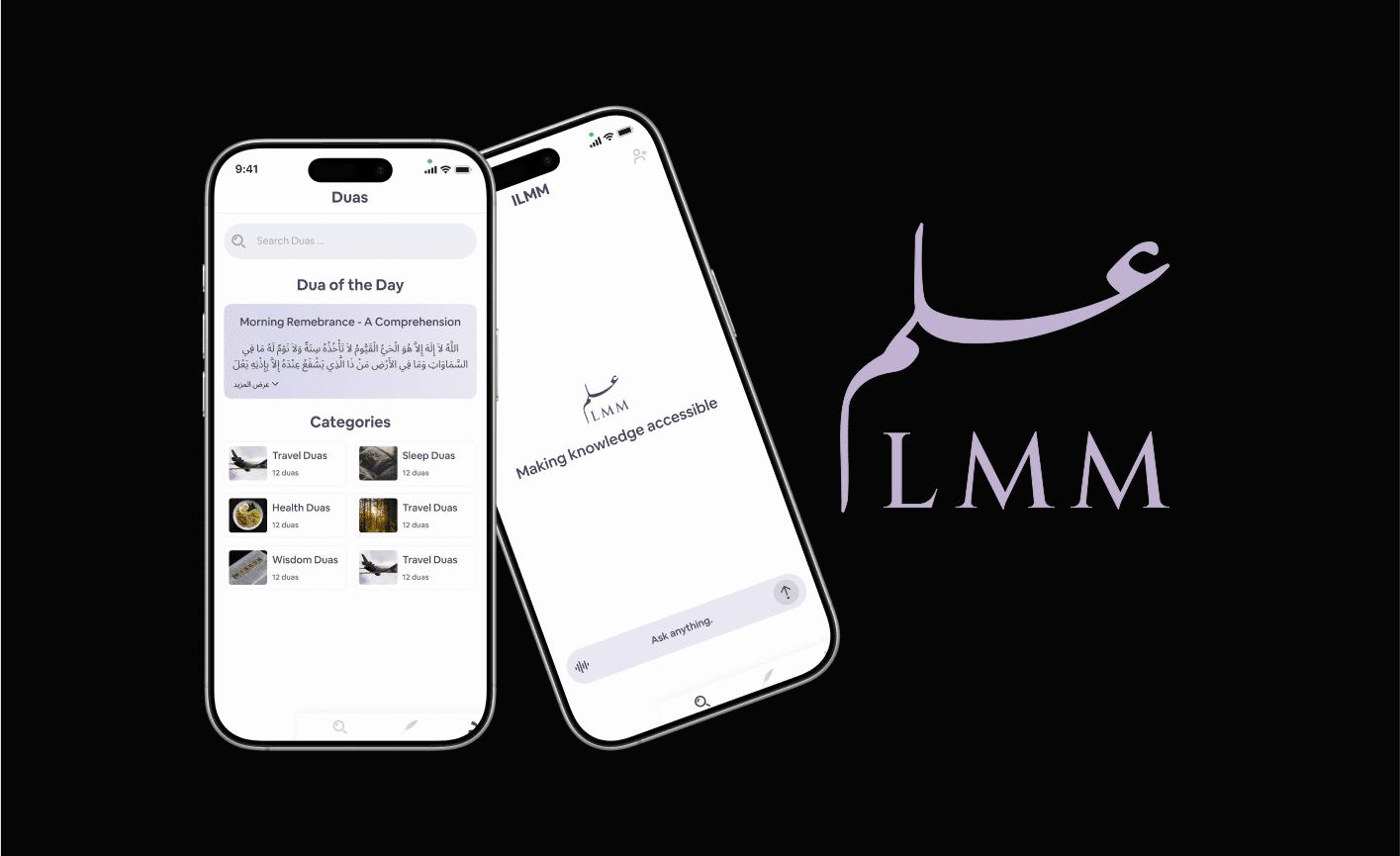
Helping users connect with faith, information, and daily life — all in one voice-enabled app.
A modern, culturally mindful mobile app designed for the Muslim community in Germany, blending AI voice search, multilingual support, and curated religious content into a clean, approachable interface.
The Challenge
Existing Islamic apps often felt cluttered, outdated, or lacked cultural sensitivity. Users struggled with:
Poor navigation to daily duas and guidance.
Limited or no voice interaction features.
Interfaces not optimized for multilingual users in a German context.
We set out to create a daily companion that feels both smart and soulful.
My Role
UX Research & Persona Building
Wireframes & User Flow Mapping
High-Fidelity UI Design
Interactive Prototype Creation
The Process
1. Research & Empathy Mapping
Interviewed 7 community members to learn about pain points and daily habits.
Mapped language preferences (Arabic, German, English) to interaction flows.
2. Ideation & Wireframing
Designed low-fidelity flows for quick access to:
Voice search
Favorites library
Duas and religious guidance
Prioritized minimal taps to reach content.
3. Visual Direction
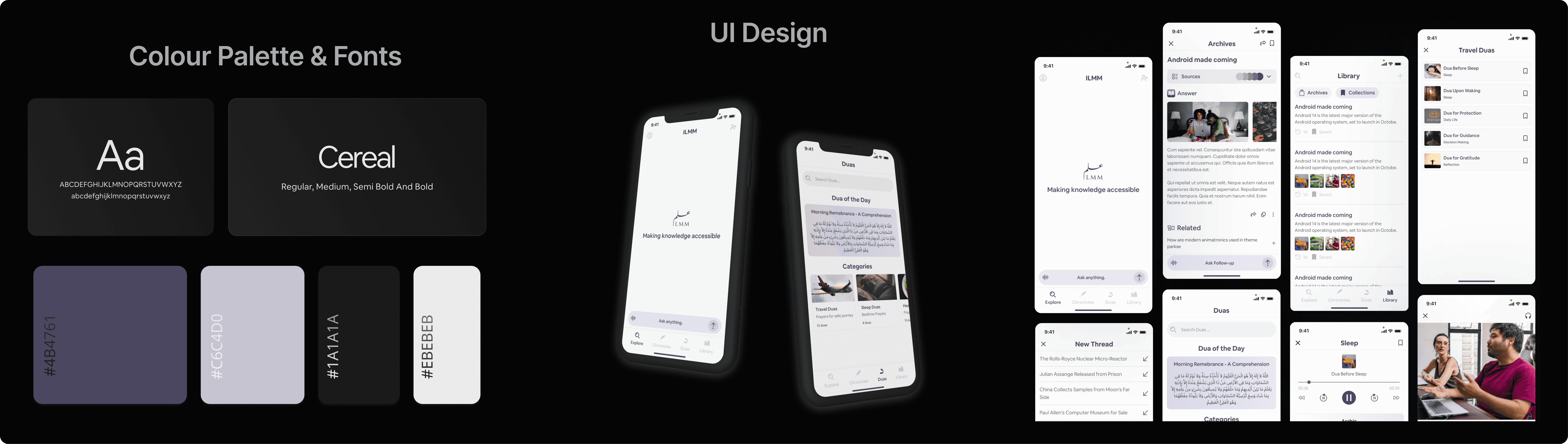
Palette inspired by modern minimalism + traditional geometric patterns.
Typography choices ensured readability across Arabic and Latin scripts.
4. Prototyping & Interaction Design
Smooth voice query transitions.
Instant language switch without losing current page state.
The Solution
AI-Powered Voice Search – Users can speak queries in multiple languages.
Favorites & Quick Access – Personal library for daily content.
Culturally Mindful UI – Respectful, modern design language.
Multilingual UX – German, Arabic, English seamlessly integrated.
Impact
Reduced search-to-content time by ~40% (prototype testing).
Received strong positive feedback from test group for clarity and cultural sensitivity.
Delivered a developer-ready UI kit + clickable prototype.
📎 Case Study Link: View on Behance →
📍 Type: Concept Design | Mobile App | Cultural UX